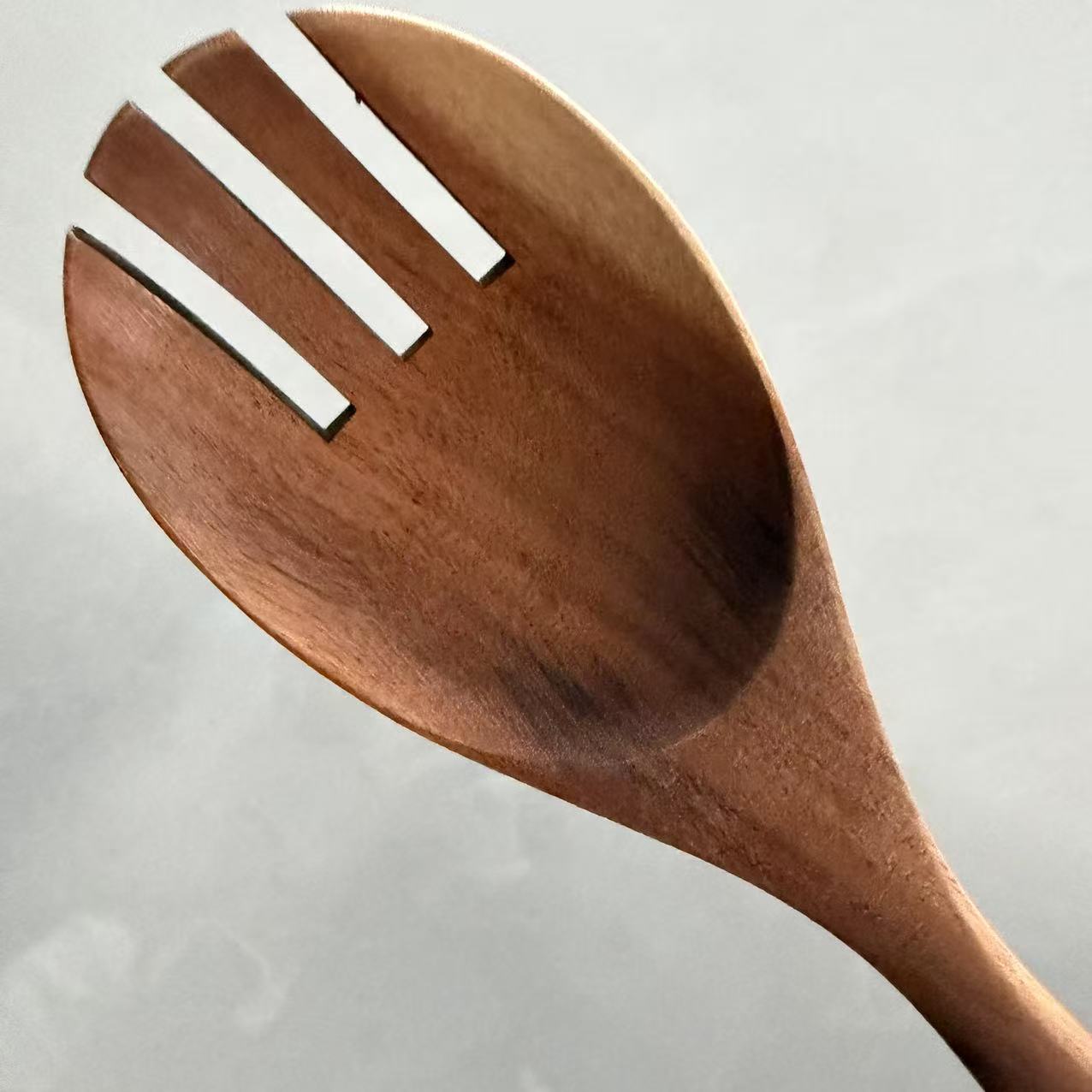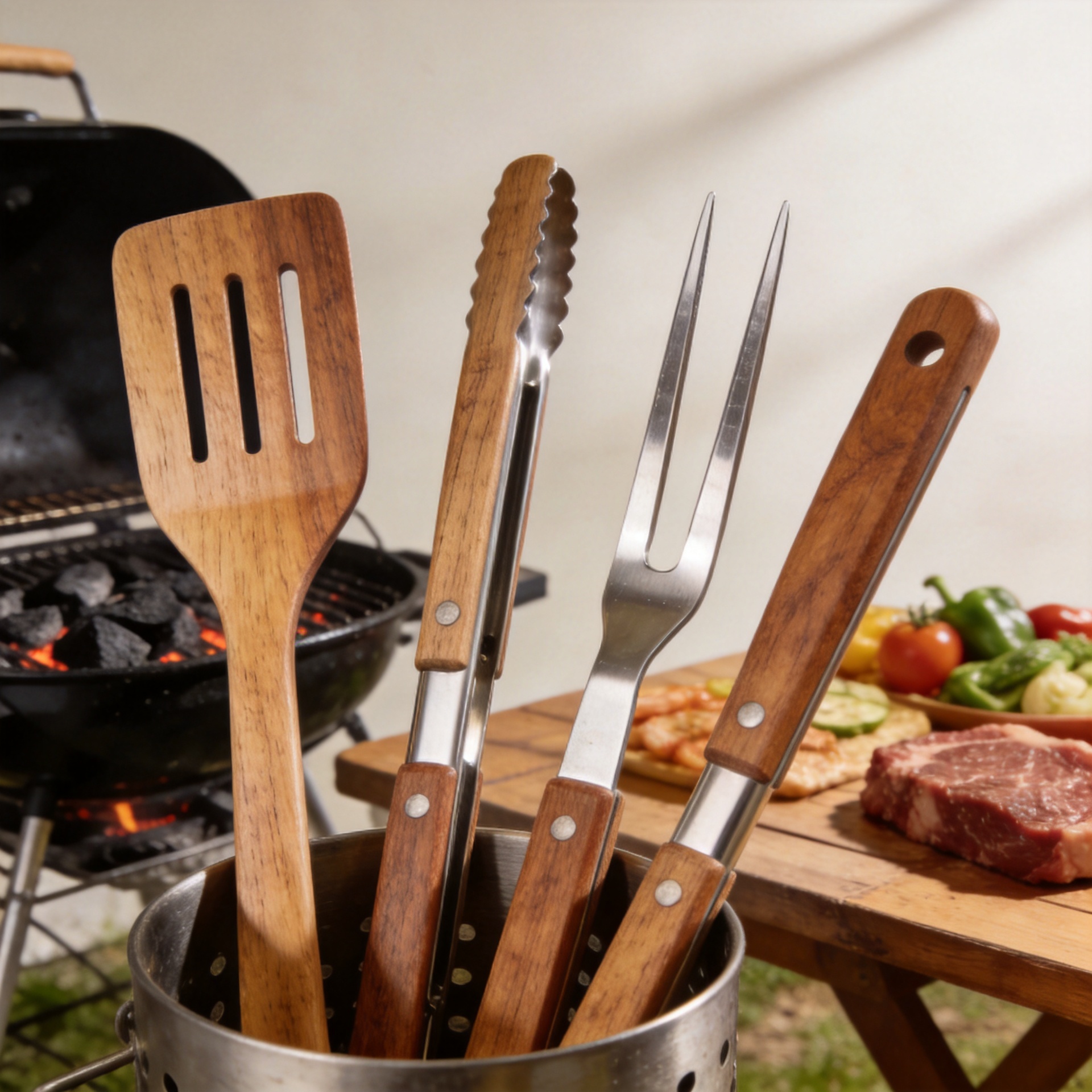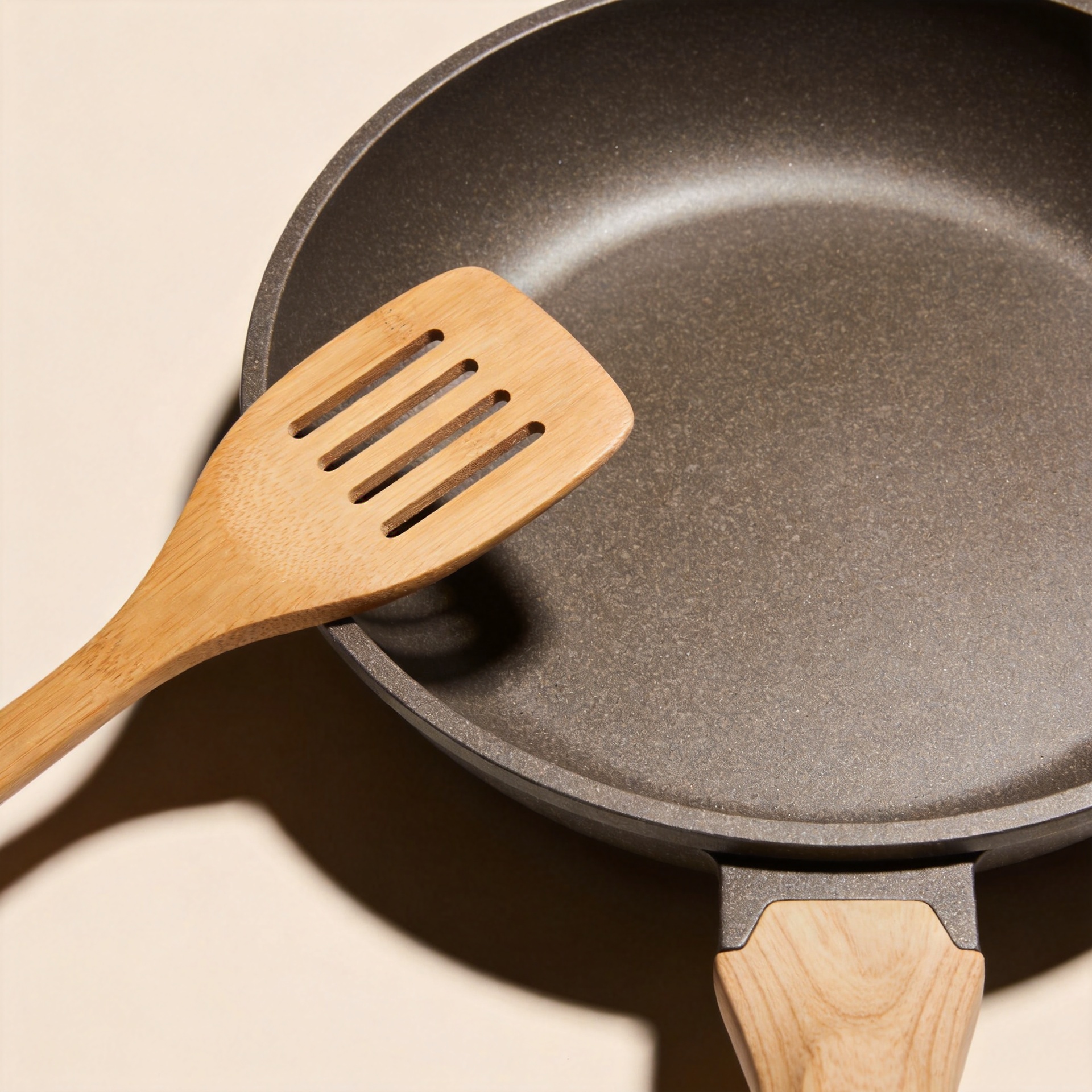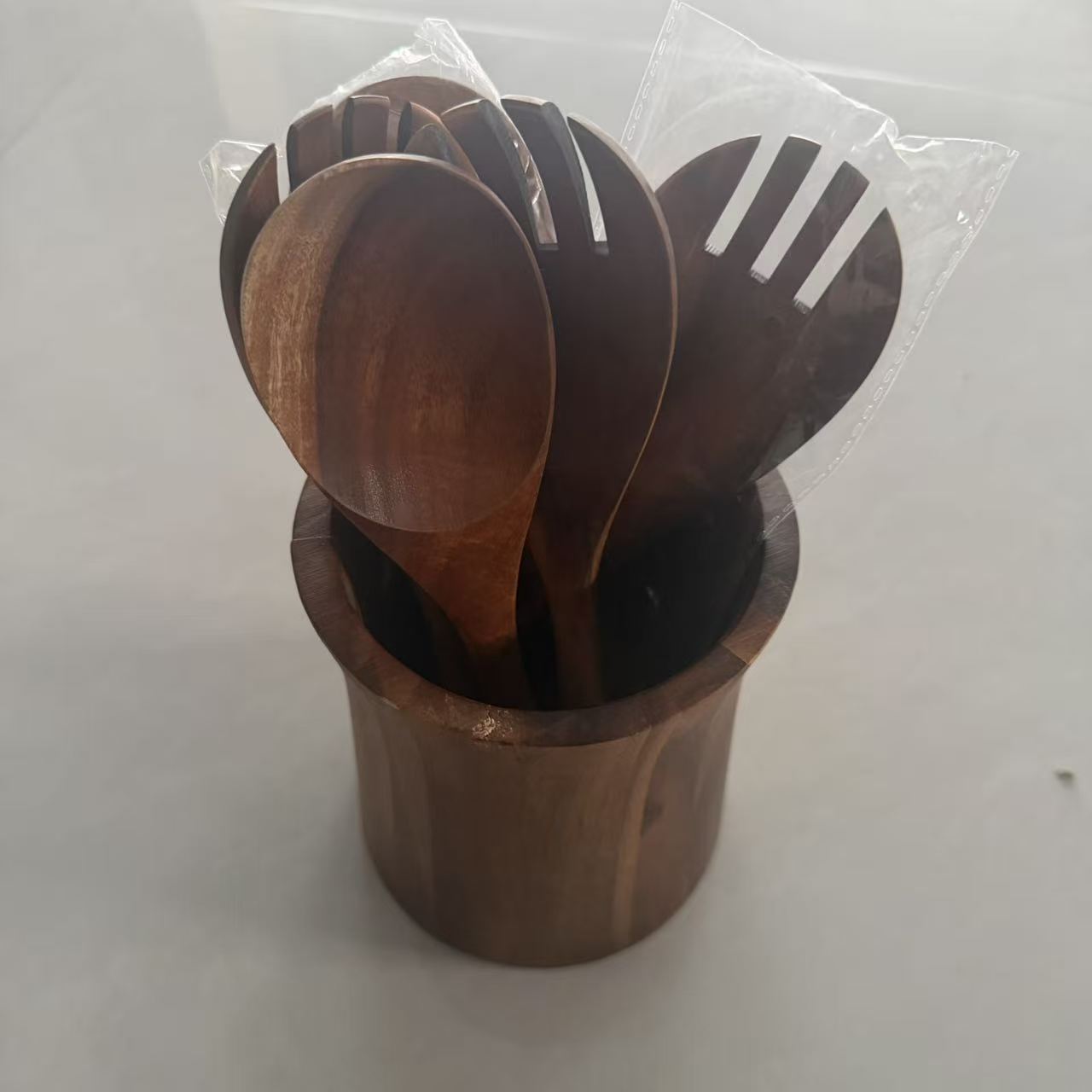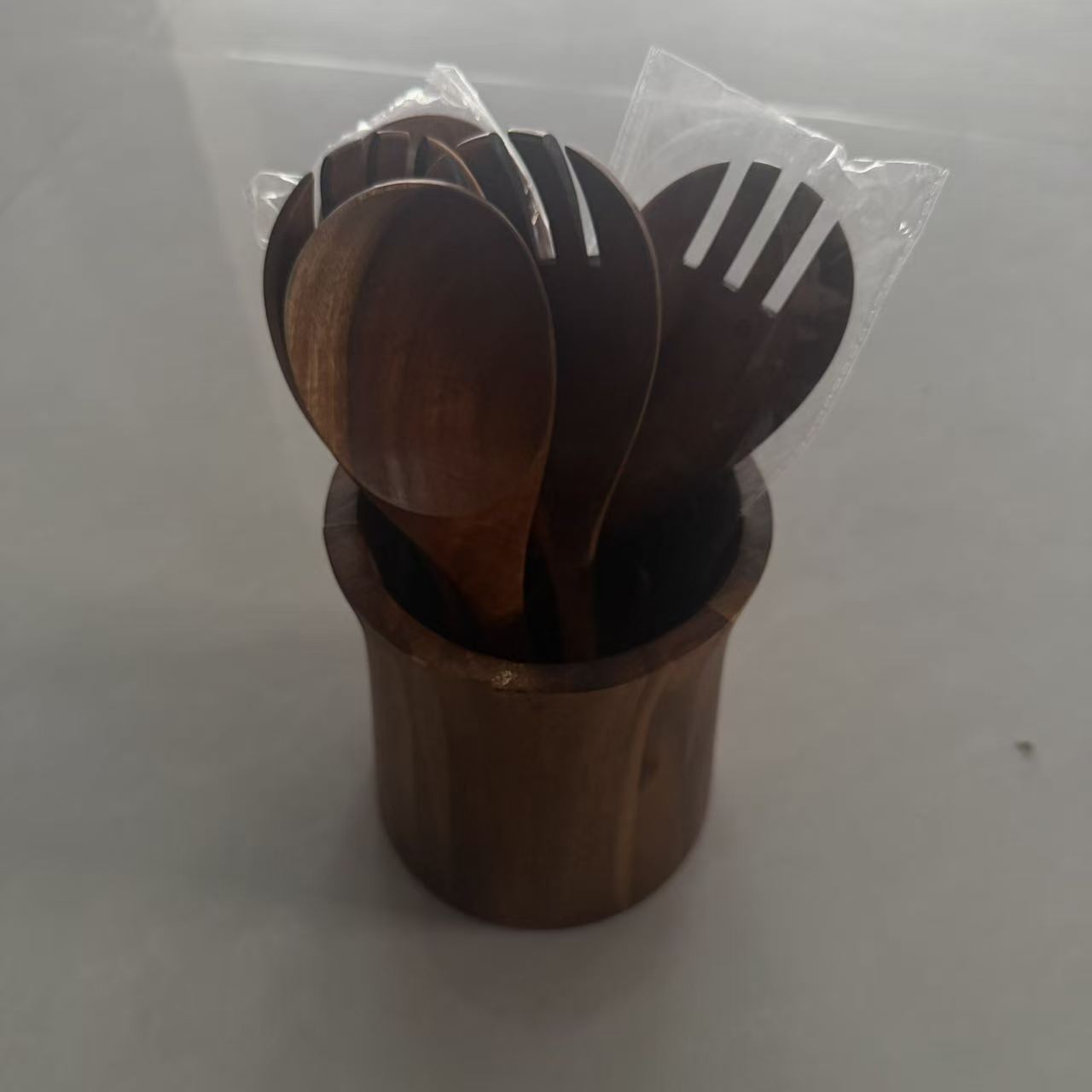
A wooden spoon set for cooking combines essential kitchen functions with the warmth of natural materials. Depending on the selected assortment, a set may include mixing spoons, slotted spoons, spatulas, and other utensils for preparing vegetables, stirring sauces, folding ingredients, and serving food. Different head shapes support different tasks, while balanced handles help improve control during repeated use. Wood selection, moisture management, sanding, and finishing all influence the final product's appearance and usability. For kitchenware manufacturers and wholesale buyers, production planning begins with defining dimensions, utensil combinations, finish requirements, and packaging specifications. Samples allow buyers to assess grip, weight, surface smoothness, and overall consistency before approving larger orders. Custom branding and coordinated packaging can further support private label programs, promotional products, and retail collections. Wooden utensils are generally suitable for many cookware surfaces, but users should avoid prolonged soaking, high-temperature exposure, and dishwasher cleaning unless the product is specifically approved for those conditions. Washing by hand and drying thoroughly helps preserve the wood. For international sourcing projects, buyers should confirm the wood species, applicable food-contact requirements, inspection criteria, and packaging details before production. These steps create a clearer purchasing process and help align the finished assortment with its intended market.