AR

Why Are Wooden Cooking Utensil Sets Popular in Modern Kitchens?
A Wooden cooking utensil set fits the way many people cook now: it needs to work well, look at home on an open counter, and feel like a considered alternative to disposable-looking kitchen tools. From a working-cook perspective, the appeal is not just nostalgia. Wood is quiet against cookware, comfortable in the hand, and visually warm enough to leave out between meals. Well-designed sets also make everyday tasks—stirring, scraping, turning, serving—feel more deliberate without making the kitchen less practical.
That said, wood is not automatically better in every situation. A good choice depends on the species, finish, construction, intended cookware, and willingness to follow simple care habits. Here is why wooden utensils continue to earn a place in modern kitchens and what to look for before choosing a set.
They protect the cookware people already own
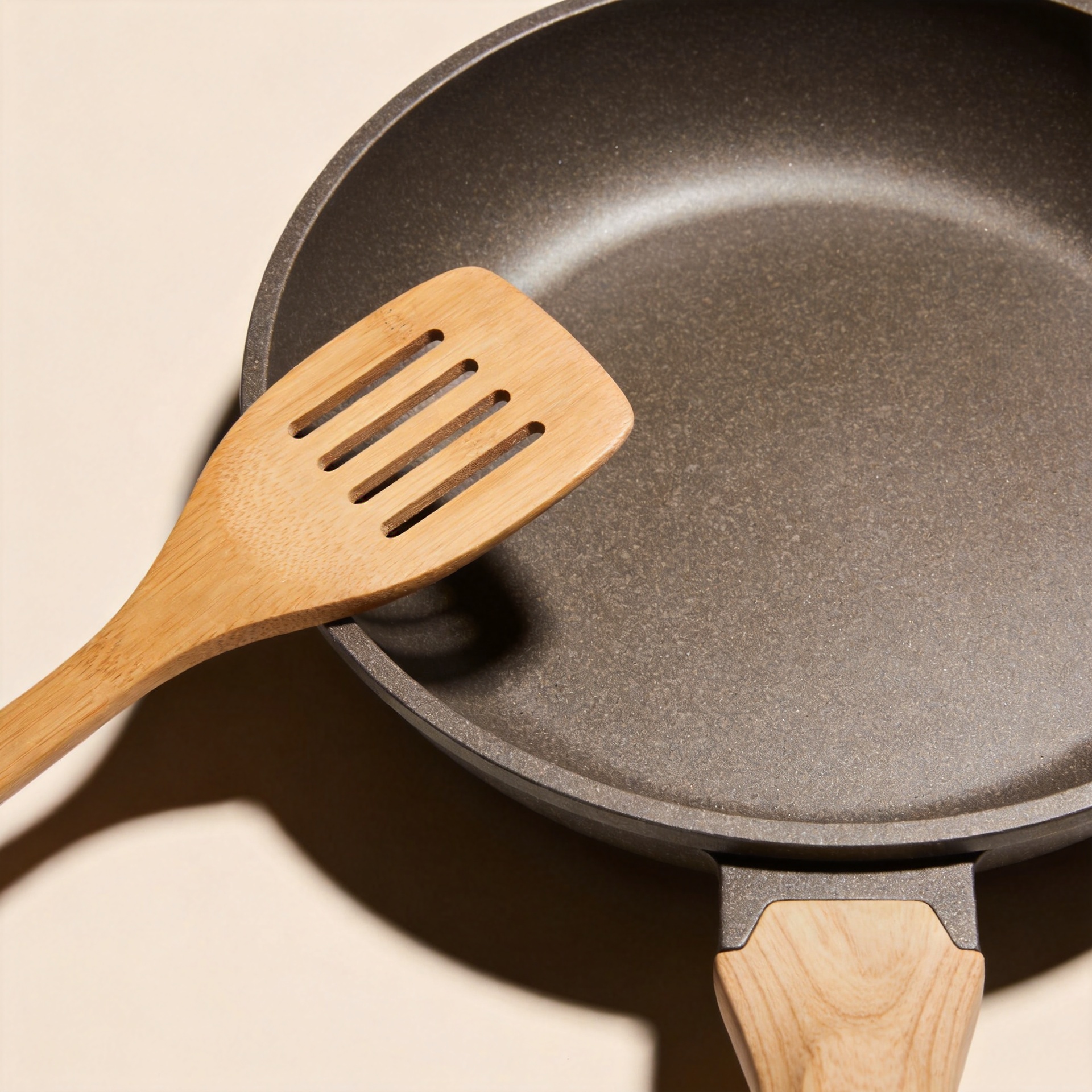
One major reason a Wooden cooking utensil set is popular is cookware compatibility. Wood is generally gentler than metal on coated pans, enamel, and other surfaces that can be marked by hard edges. A wooden spatula or spoon can move food around a pan without the sharp, clattering contact that makes people nervous about a favorite nonstick skillet.
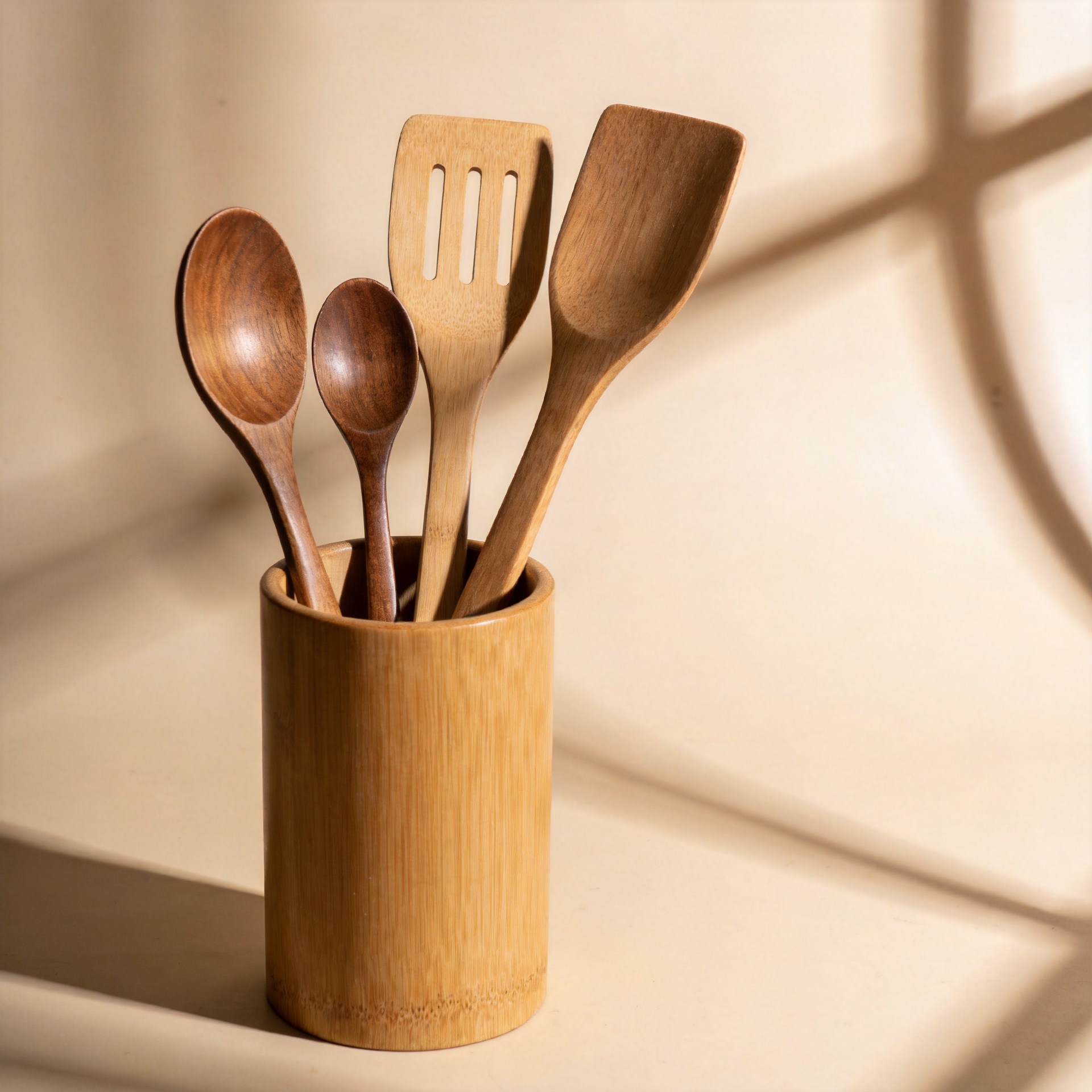
This does not mean every wood tool is interchangeable. A broad, thin turner suits eggs or pancakes; a rounded spoon works better for sauces and grains; a squared spoon or flat scraper reaches pan corners more effectively. A useful set covers these distinct jobs rather than simply repeating the same spoon in several sizes. That functional range is why well-planned eco cooking tools can replace several mismatched utensils without overcrowding a drawer.
Natural material brings warmth without sacrificing everyday function
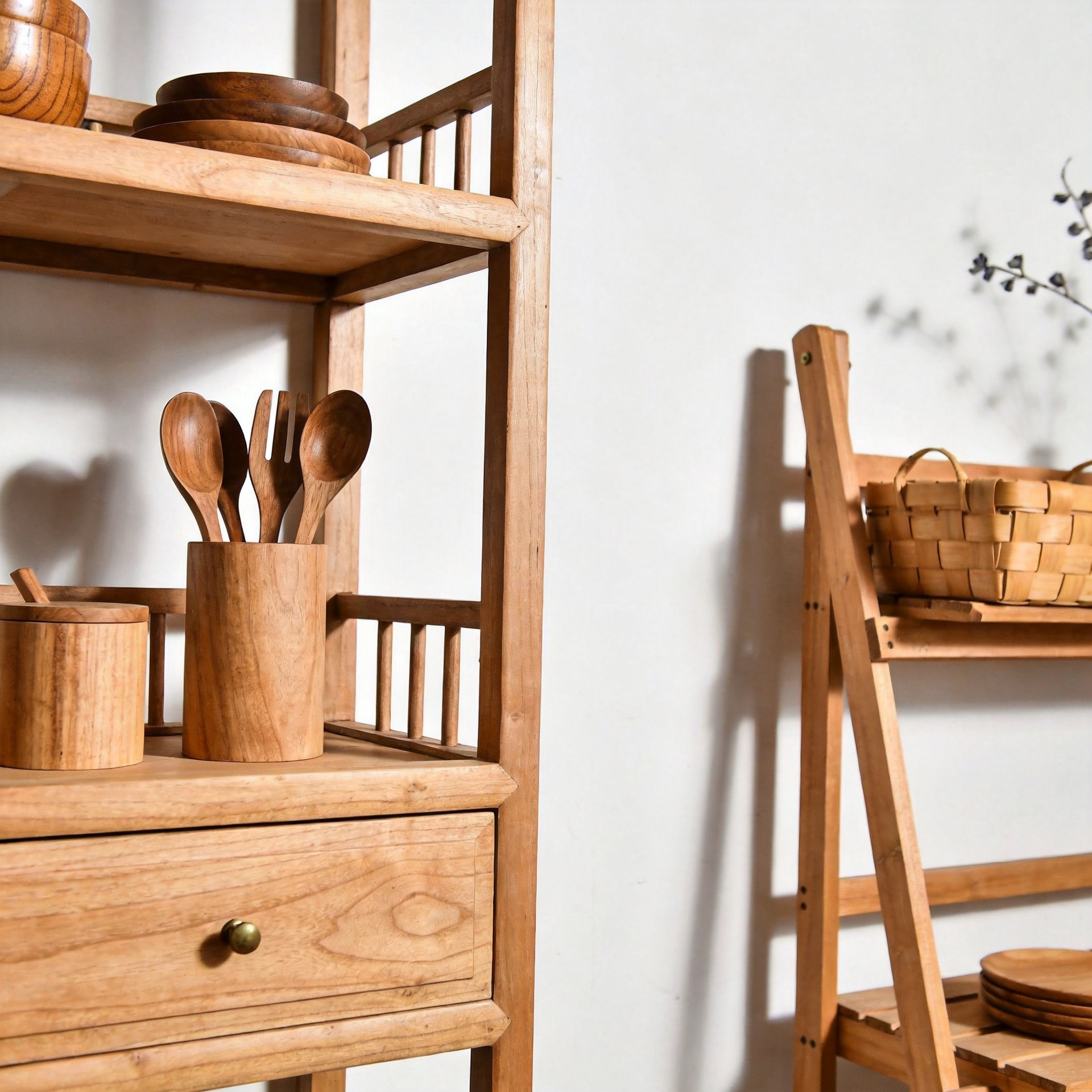
Modern kitchens often combine hard surfaces—stone counters, tile, stainless steel, and glass—with something softer in appearance. Natural wood provides that contrast. Its grain and color variation make a utensil holder look less clinical while keeping the tools close at hand. In other words, natural kitchenware is part utility and part visible kitchen styling.
The appeal is also tactile. Wood usually feels less cold than steel and less synthetic than molded plastic. Handles can offer a comfortable, balanced grip for stirring a pot or serving at the table. The exact feel varies by species and shape, of course, so buyers should judge finish smoothness, handle thickness, and the transition between handle and working end instead of relying on appearance alone.
They suit an ingredient-first, low-clutter cooking style
People who cook frequently tend to value tools that disappear into the routine. A Wooden cooking utensil set is often chosen because it is straightforward: the tools stir, lift, scrape, and serve without adding bright colors, detachable parts, or a complicated learning curve. The material pairs naturally with cast iron, ceramic, and wood cutting boards, but it can also soften a compact apartment kitchen filled with modern appliances.
There is a practical side to this simplicity. A matched set makes it easier to keep the essentials together, and a durable utensil can remain useful long after a trend-driven gadget has been forgotten. For households building a smaller collection of better-used tools, that is a meaningful advantage.
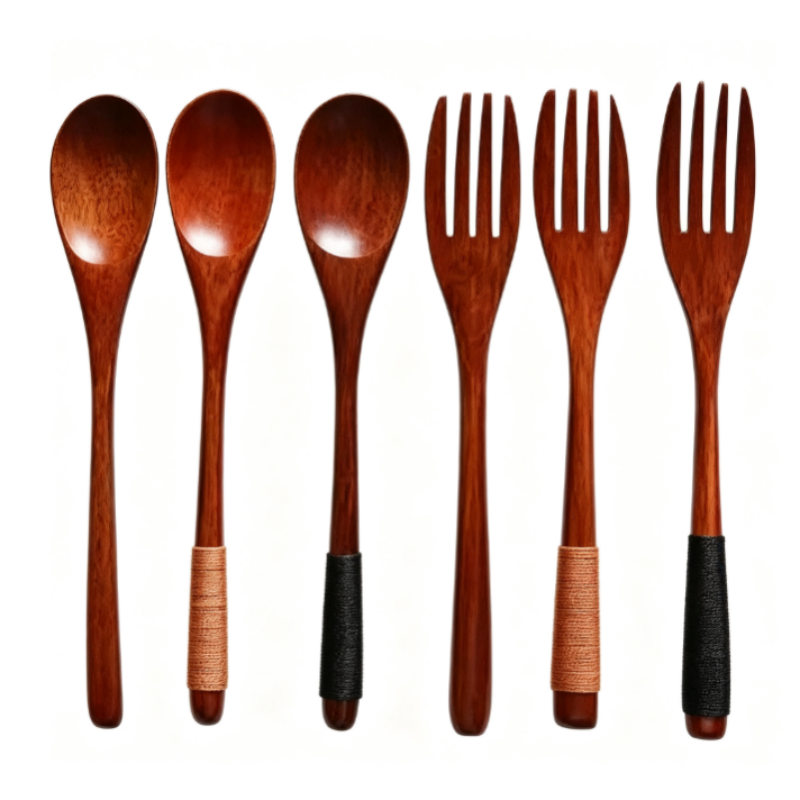
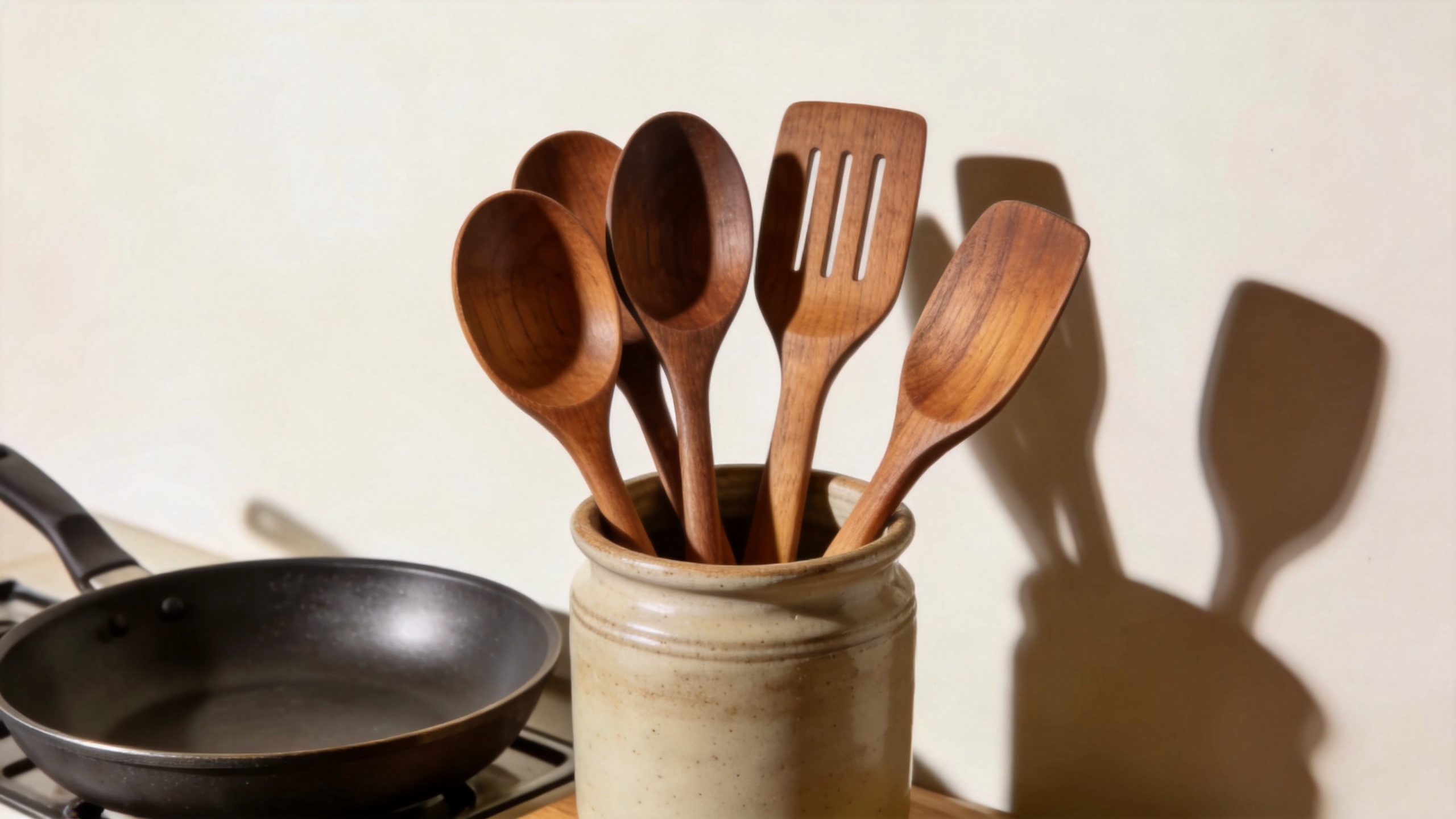
Wooden tools combine everyday cooking function with a warm, natural kitchen presence.
Wood can support more thoughtful purchasing—when claims are verified
Interest in sustainable kitchen products has helped bring more attention to wood, but it is worth being precise. Wood is a natural material, yet a sustainability claim depends on details that cannot be assumed from a product photo: where the timber came from, how it was processed, what finish was applied, and whether the supplier can provide relevant documentation.
A responsible buying conversation asks better questions. For a Wooden cooking utensil set, ask the supplier to identify the wood species, explain the finish, and share sourcing or certification documents if environmental claims are being made. Ask about food-contact documentation where it is relevant to the market. This approach is more useful than treating “eco” as a label on its own. It helps retailers and home cooks distinguish genuinely considered sustainable kitchen products from vague marketing language.
Material quality matters more than a uniformly matching color
Not all wooden utensils perform the same way. Dense hardwoods are commonly valued for their substantial feel and resistance to everyday scoring, while natural grain can make each piece look distinct. Acacia, for example, is widely used in wooden kitchenware because of its warm appearance, density, and naturally expressive grain. Caoxian Kangyi Wood Products Co., Ltd. works across wooden kitchenware, storage racks, and furniture, which reflects the kind of cross-category woodworking experience buyers may consider when assessing a manufacturer.
But a beautiful grain pattern is not enough. Look for smooth sanding, no sharp seams, a comfortable handle, and an evenly finished surface. In a set, check that the tool heads are shaped for real jobs and that the pieces do not feel overly thin at high-stress points. Natural variation is normal in wood; rough finishing, cracks, loose joints, or an unclear coating are not features to overlook.
Care is simple, but it is not optional
The trade-off for the warmth of a Wooden cooking utensil set is a small care routine. Current care guidance commonly recommends hand washing with mild soap, drying promptly, avoiding long soaking, and keeping wood out of the dishwasher. Excess water and harsh dishwasher cycles can dry the material unevenly or encourage warping and cracking over time.
When a utensil begins to look dry, a suitable food-safe conditioning oil can help refresh the surface according to the maker’s care guidance. The goal is not to turn maintenance into a project; it is simply to prevent neglect from shortening the life of useful natural kitchenware. Clear care instructions are especially important for gifts and retail sets because they set realistic expectations before the first use.
What a useful set should include
A practical Wooden cooking utensil set does not need to be enormous. For most kitchens, the strongest core includes:
- a rounded stirring spoon for soups, sauces, and grains;
- a slotted spoon for lifting foods while leaving liquid behind;
- a flat spatula or turner for eggs, vegetables, and pan scraping;
- a corner or squared spoon for reaching edges of pots and skillets; and
- a serving spoon for moving food from pan to bowl or table.
Buyers may add specialized pieces for wok cooking, baking, or entertaining, but the central question is whether each item earns its space. A concise set of well-shaped eco cooking tools is usually more useful than a large bundle with duplicate forms.
The lasting appeal is functional, visual, and personal
Wooden utensil sets remain popular because they solve more than one problem at once. They are gentle on many cookware surfaces, easy to understand, comfortable to use, and visually compatible with the natural-material direction of contemporary kitchens. Their variations in grain and tone can make a kitchen feel lived-in rather than mass-produced.
A sound choice is not the set with the boldest environmental promise or the most pieces. It is a Wooden cooking utensil set with sound construction, useful shapes, clear care information, and sourcing claims a supplier can support. Chosen that way, wooden utensils can remain everyday tools—not just decorative ones—for years of cooking.