AR

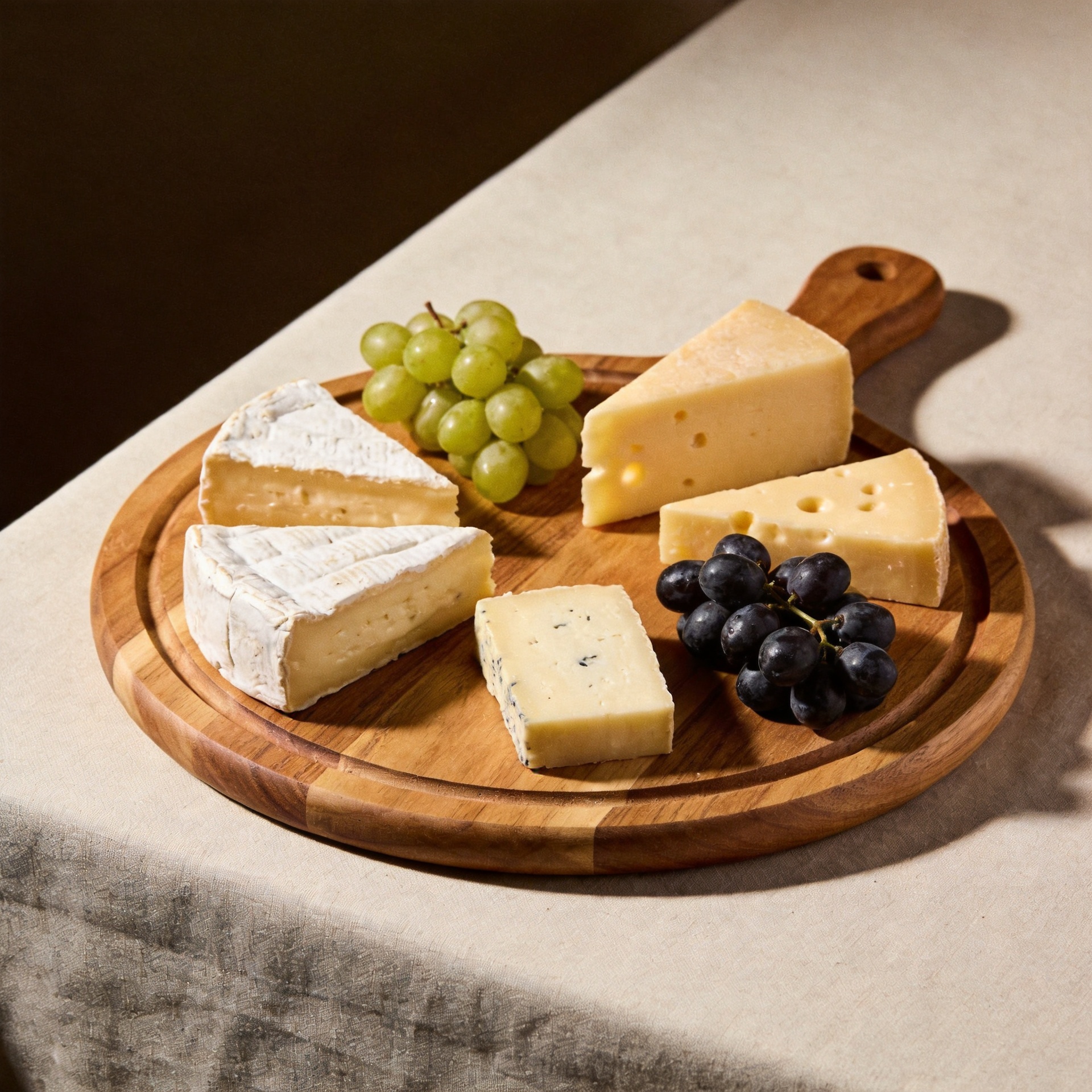
What Features Should Buyers Consider in a Wooden Cheese Board?
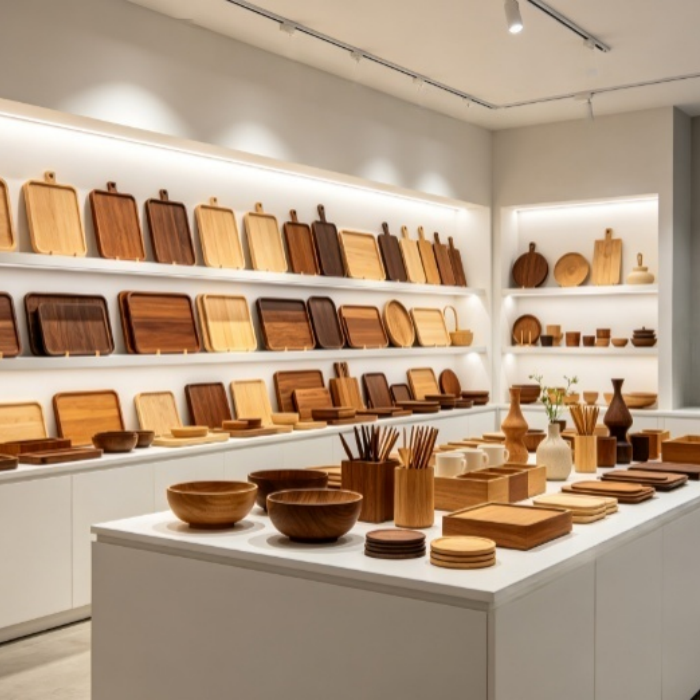
A wooden cheese board can look convincing in a catalog and still be a poor buying decision. For supermarket buyers, importers, and hospitality procurement teams, the board has to do more than create an attractive cheese display. It must arrive consistently, handle ordinary food-service use, fit the intended price tier, and come with the product and care information needed for the market where it will be sold.
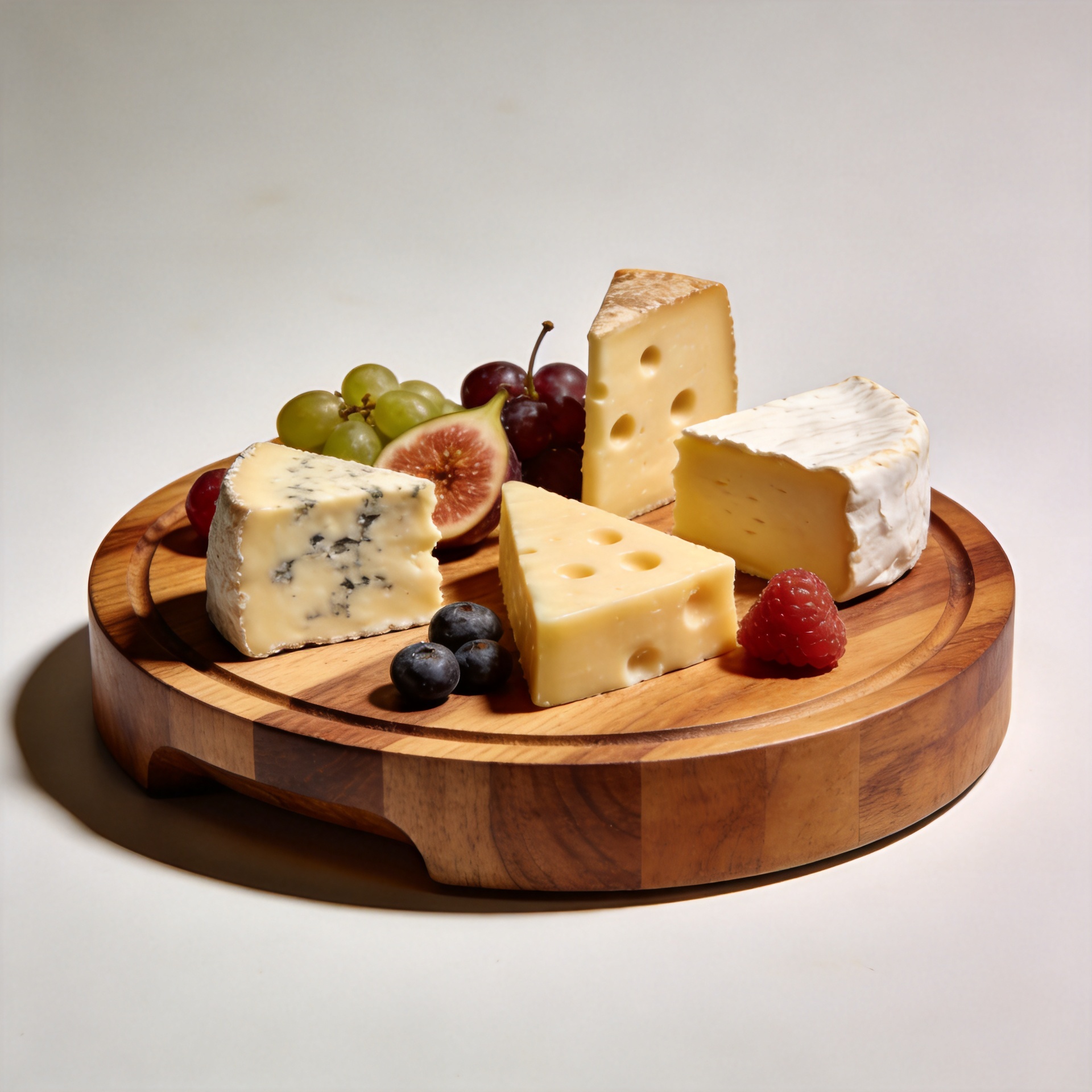
When evaluating a Wooden cheese board for a range, start with a structured checklist instead of treating wood species or styling as a shortcut for quality. A well-chosen board balances material stability, usable proportions, surface treatment, food-contact documentation, and packaging protection. The right answer may differ for a gift assortment, a commercial cheese board, or a restaurant presentation piece.
1. Start with the intended use, not the product photo
Before comparing samples, define what the board must do. A compact wooden platter for a retail gift set has different priorities from a board used repeatedly for cheese, charcuterie, and bread service. A restaurant may value a stable base, easy handling, and a repeatable look across many tables. A specialty retailer may put more weight on grain character, shape, and gift-ready presentation.
Ask a basic question: will the board be mainly a serving surface, a light-prep surface, or both? If it will be used around knives, request clarity about the expected use and care guidance. If it will carry chilled or moist foods, inspect how the surface finish behaves and whether the design leaves places where food residue or moisture can collect. No single Wooden cheese board suits every use; the product should fit the working conditions and customer expectations of the channel.
2. Assess the wood and construction together
Species matters, but it is not the whole quality story. Acacia is commonly used in wooden kitchenware because its visible grain and density can support a warm, substantial presentation. Still, a species name alone does not confirm that a board is well made. Buyers should examine wood selection, thickness, joinery, sanding, and finish as one system.
- Grain and visual consistency: Natural variation is expected, but the sample should show deliberate grading rather than distracting contrasts, open defects, or filler that is visible under normal light.
- Board flatness: Put the sample on a known flat surface and check for rocking. A board that does not sit securely can be frustrating in a restaurant setting and may signal issues with material conditioning, machining, or finishing.
- Edges and corners: These should be smoothly eased, with no sharp fibers, splinters, or rough patches. Rounded edges also make the board more comfortable to carry and less vulnerable to chipped appearance during handling.
- Construction details: If the design uses multiple pieces, look closely at seams. Joints should be clean and aligned, not visibly gapped or patched. Any handle, foot, or decorative hardware should be secure and should not obstruct cleaning.
Thickness deserves attention too. A thicker board can feel more substantial and resist flexing, but it also affects shipping weight, retail price, and storage. The aim is not simply to buy the heaviest Wooden cheese board; it is to choose a proportion that looks intentional and remains practical for the selling channel.
3. Treat surface finish and food-contact information as separate checks
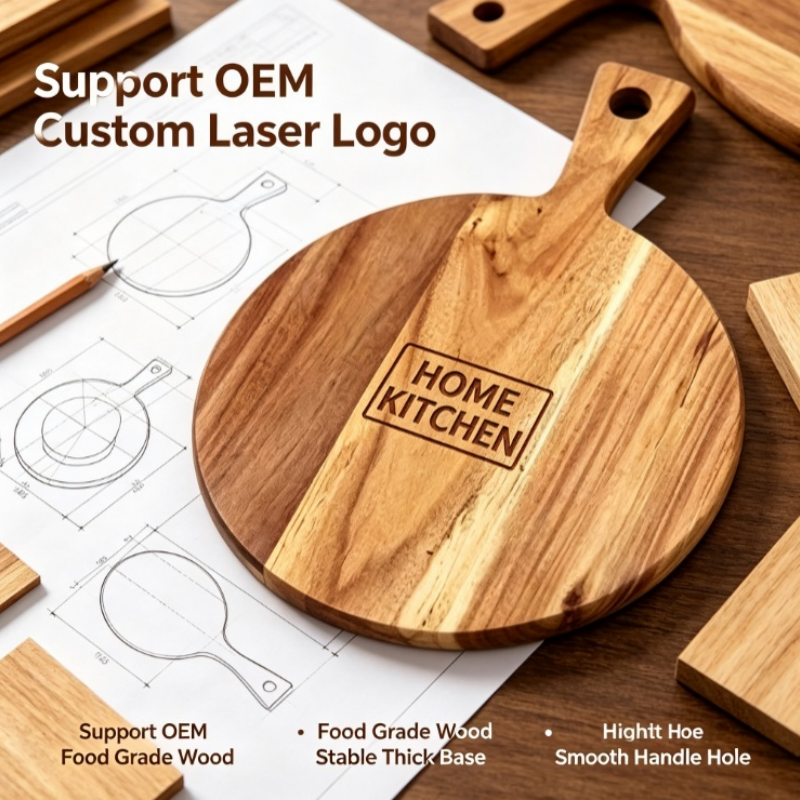
It is easy to assume that a natural-looking surface is automatically suitable for food presentation. It is not. Buyers should ask what treatment is applied, whether the supplier can provide relevant documentation for the destination market, and what the recommended maintenance routine is. Do not turn generic terms such as “food safe” into a claim without supporting documentation.
For care context, USDA guidance notes that wooden cutting boards can be washed with hot, soapy water after use, rinsed, and dried. That is useful information for product instructions, but it does not replace the buyer’s responsibility to verify local food-contact, labeling, and food-service requirements. A commercial buyer should request documentation early, especially when the product will be sold or used in markets with specific compliance expectations.
Examine samples under ordinary indoor light as well as bright light. Uneven oil absorption, sticky spots, strong odor, or finish buildup at the edge can become more obvious after a shipment arrives. The finish should enhance the wood rather than conceal poor sanding or uneven color. If customers are expected to refresh the surface with oil, make sure the care card says so plainly.
4. Evaluate serving board design for real handling
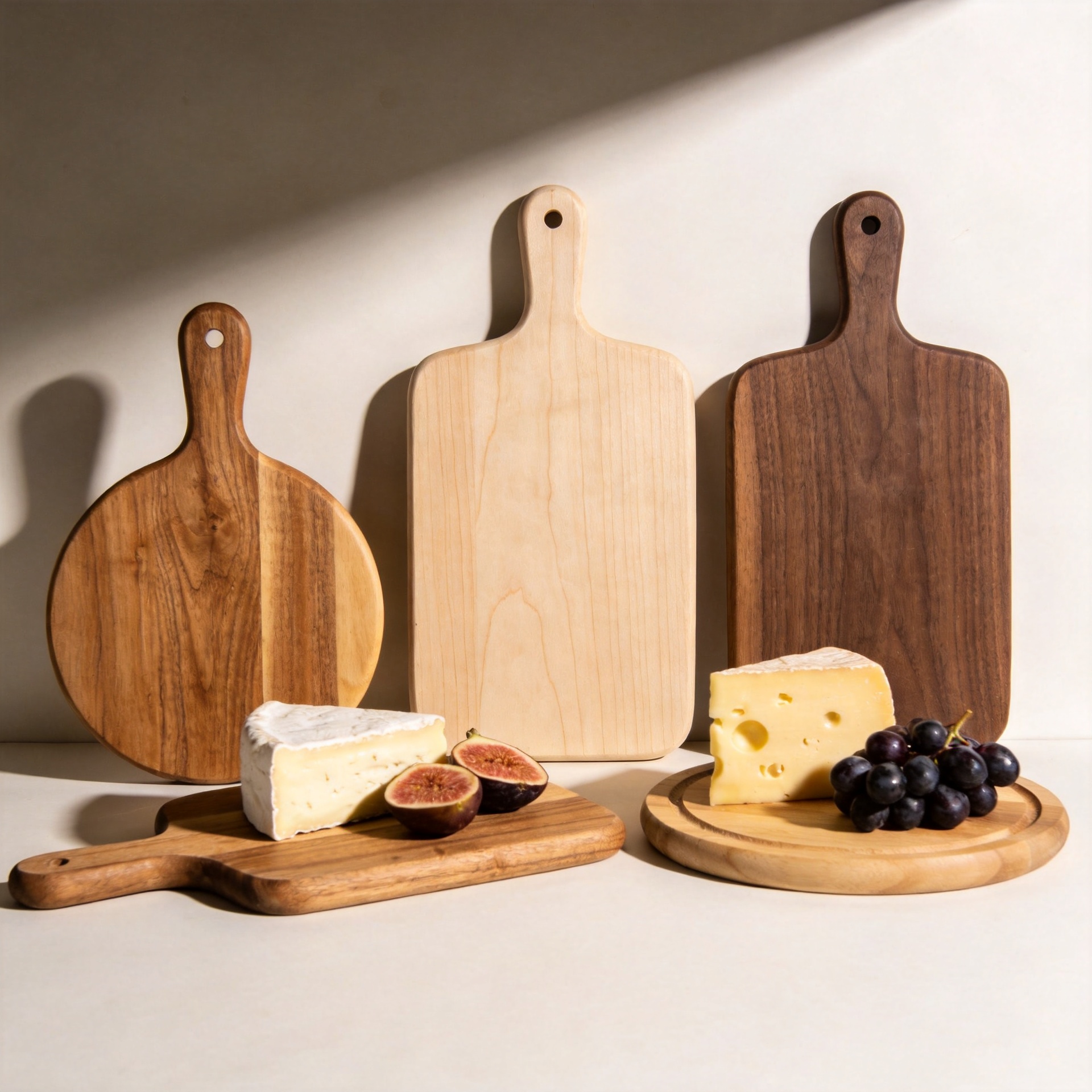
A strong serving board design supports the food and the person carrying it. The usable area should make sense for the intended portion size, while the outer shape should remain easy to stack, store, and photograph. Cutouts, handles, feet, rims, or grooves can add distinction, but each extra feature creates another inspection point.
For example, a juice groove may be useful for some serving situations but can reduce the flat space available for arranging cheese and accompaniments. A handle can help when a full board is carried across a dining room, yet it needs a smooth finish and secure attachment. For restaurant accessories, repeatability matters: several boards should look like a coherent set even though natural wood variation cannot be fully identical.
Request dimensions, tolerances, and a clear packing layout before approving a production order. This helps buyers determine whether a commercial cheese board fits existing shelves, gift boxes, dishwashing-adjacent storage, or restaurant service stations. It also prevents a visually appealing sample from becoming an awkwardly sized production item.
5. Inspect consistency, packaging, and reorder readiness
The sample is only a starting point. For a retail or trading-company purchase, ask how the supplier controls variation across a production batch. Useful questions include how boards are graded, what visual defects are rejected, how flatness is checked, and whether a pre-shipment inspection can compare finished goods with the approved reference sample.
Packaging should protect edges and corners from rubbing in transit. A board may survive ordinary use well but still arrive with scuffs, chipped corners, or moisture exposure if the inner packing is inadequate. Evaluate the individual wrap, separator material, carton layout, and any required retail presentation together. If the product is a gift-oriented wooden platter, packaging is part of the perceived value rather than an afterthought.
Finally, discuss reorders before the first order is placed. Ask whether the same wood appearance, dimensions, finish direction, and packaging specification can be maintained. Natural variation should be explained honestly, but a supplier should also be able to explain what can be controlled. That distinction helps protect a retail display from avoidable inconsistency.
6. Use a buyer checklist before approving the Wooden cheese board
- Confirm the target use: retail gifting, hospitality service, or everyday food presentation.
- Review the sample for flatness, sanding quality, grain grading, edge comfort, and construction details.
- Check whether the serving board design provides usable space and handles realistically for its intended setting.
- Request the applicable finish, care, food-contact, and market-compliance documentation rather than relying on broad marketing language.
- Approve written dimensions, tolerances, packaging, and an inspection reference for the production order.
- Plan for natural variation and agree on the acceptable appearance range before a repeat order is needed.
Final thought
The most reliable Wooden cheese board is not necessarily the one with the boldest grain or the most elaborate silhouette. For serious buyers, the better choice is the one whose material, finish, serving function, quality controls, and care information work together. A thoughtful checklist makes it easier to source restaurant accessories and retail-ready boards that look credible on arrival, function well in use, and support a consistent range over time.