AR

How to Choose the Right Wooden Spatula for Different Cooking Tasks?
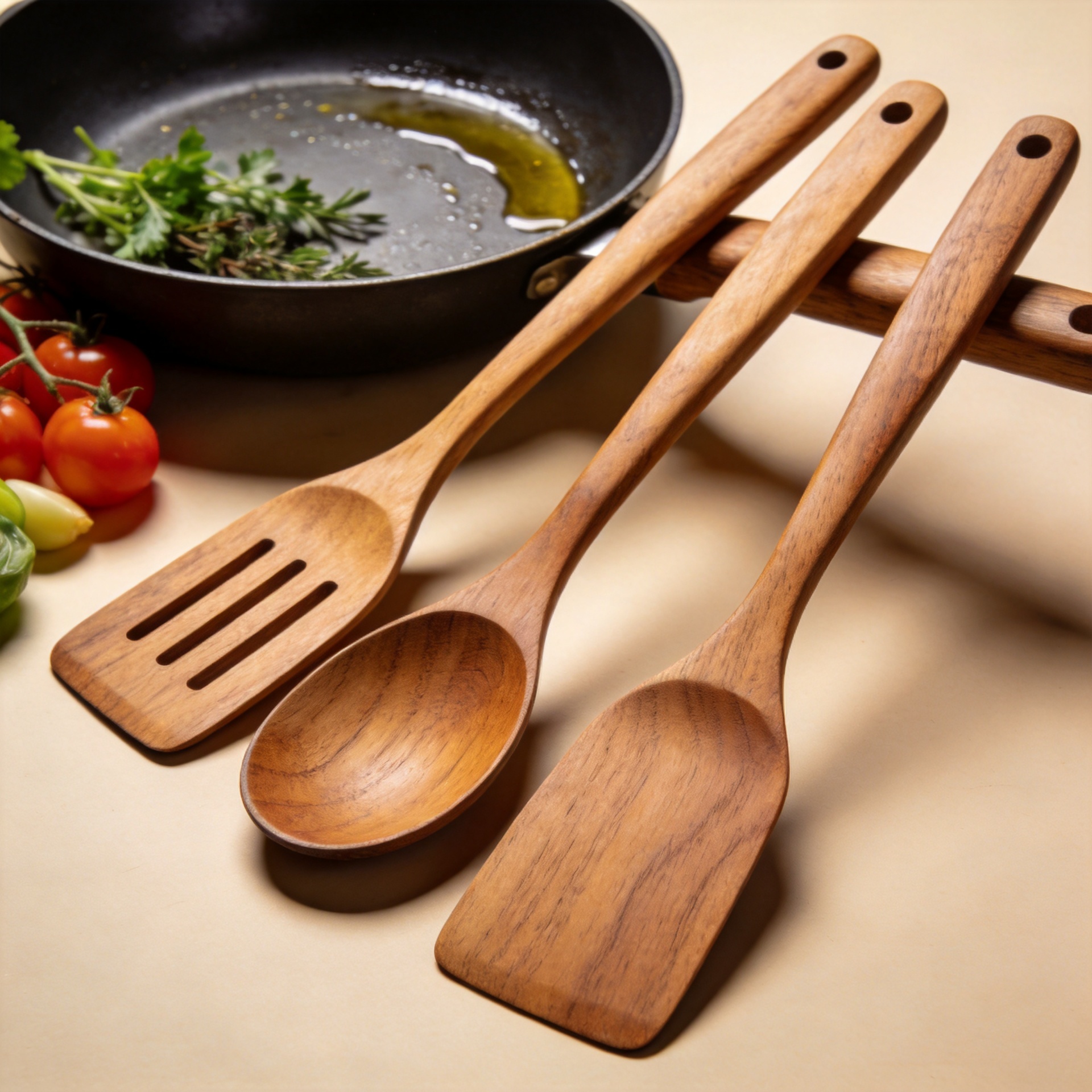
A wooden spatula earns its place in a kitchen because it is gentle on cookware, comfortable to hold, and useful far beyond one recipe. But “wooden spatula” covers several quite different shapes. A broad wooden turner that handles pancakes well can feel clumsy when you are folding eggs, while a rounded tool that stirs a thick sauce may not reach the sharp corner of a sauté pan. A useful choice starts with the task, then works backward to head shape, edge thickness, handle, wood, and finish.
There is no single right answer for every cook. If your priority is clean flipping, pay closest attention to a thin leading edge and a supportive head. If you mostly stir soups and sauces, bowl shape and handle balance matter more. Thinking in tasks makes it much easier to choose cooking tools that get used daily instead of sitting in a drawer.
Start with the job your wooden spatula needs to do
Before comparing wood species or shopping for a matching set, list the jobs you do most often. Most kitchen spatula designs fall into a few practical groups:
- Turner: a wide, relatively flat head for pancakes, eggs, burgers, fish, and roasted vegetables.
- Stirring spatula: a rounded or gently curved head for sauces, risotto, oatmeal, and one-pot meals.
- Scraper: a straight, thin edge for loosening fond, moving food across a pan, and reaching pan corners.
- Slotted tool: openings in the head that let oil or cooking liquid drain away when lifting food.
A versatile wooden spatula can cover several of these jobs, but a tool optimized for one motion usually feels better in that motion. That is not a flaw in a general-purpose utensil; it is simply a useful trade-off to recognize before buying.
Match the head shape to the cooking task
For eggs, pancakes, and delicate foods: choose a thin wooden turner
For foods that need to be lifted in one piece, look for a broad head with a tapered front edge. A thin edge slips under food with less force, while enough width supports the food as you turn it. The head should be smooth and free of sharp splinters, especially if you use nonstick, ceramic, or enamel cookware.
A wooden turner should not be overly thick at the front. Heavier does not automatically mean better: for frequent turning, a lighter, balanced tool can be more practical while still being durable enough for normal home cooking. For very fragile fish or large crepes, many cooks prefer a wider, longer turner rather than forcing a narrow spatula to do a job it was not designed for.
For sauces, grains, and sautéing: choose a rounded edge
A rounded stirring spatula is useful when the goal is to keep ingredients moving without aggressively cutting through them. It works well for scraping the bottom of a saucepan, folding vegetables through a skillet, and stirring thick mixtures that would catch in a shallow spoon. A slight curve creates a more natural sweeping motion around a pan.
Check the transition from head to handle. A gradual, comfortable neck helps the tool feel controlled when you stir for several minutes. If a handle is too thin, it can twist in the hand; if it is too bulky, precise stirring becomes tiring. The difference is noticeable, but not dramatic—until you are making a large batch of sauce or stirring a sticky mixture.
For browning and pan corners: choose a straight-edged scraper
A flat, straight-edged wooden spatula is often the most useful shape for scraping browned bits from a pan, pushing food from one side to another, and working into square cookware corners. The edge should be defined enough to contact the pan, but it does not need to be razor thin. An extremely thin wooden edge may chip sooner if used to pry stuck food loose.
For this task, inspect the edge from the side. It should look even, without a visible twist or rough patch. A small detail such as edge consistency is easy to overlook in a product photo, but it affects how the utensil meets the pan every day.
For fried foods and blanched vegetables: consider slots
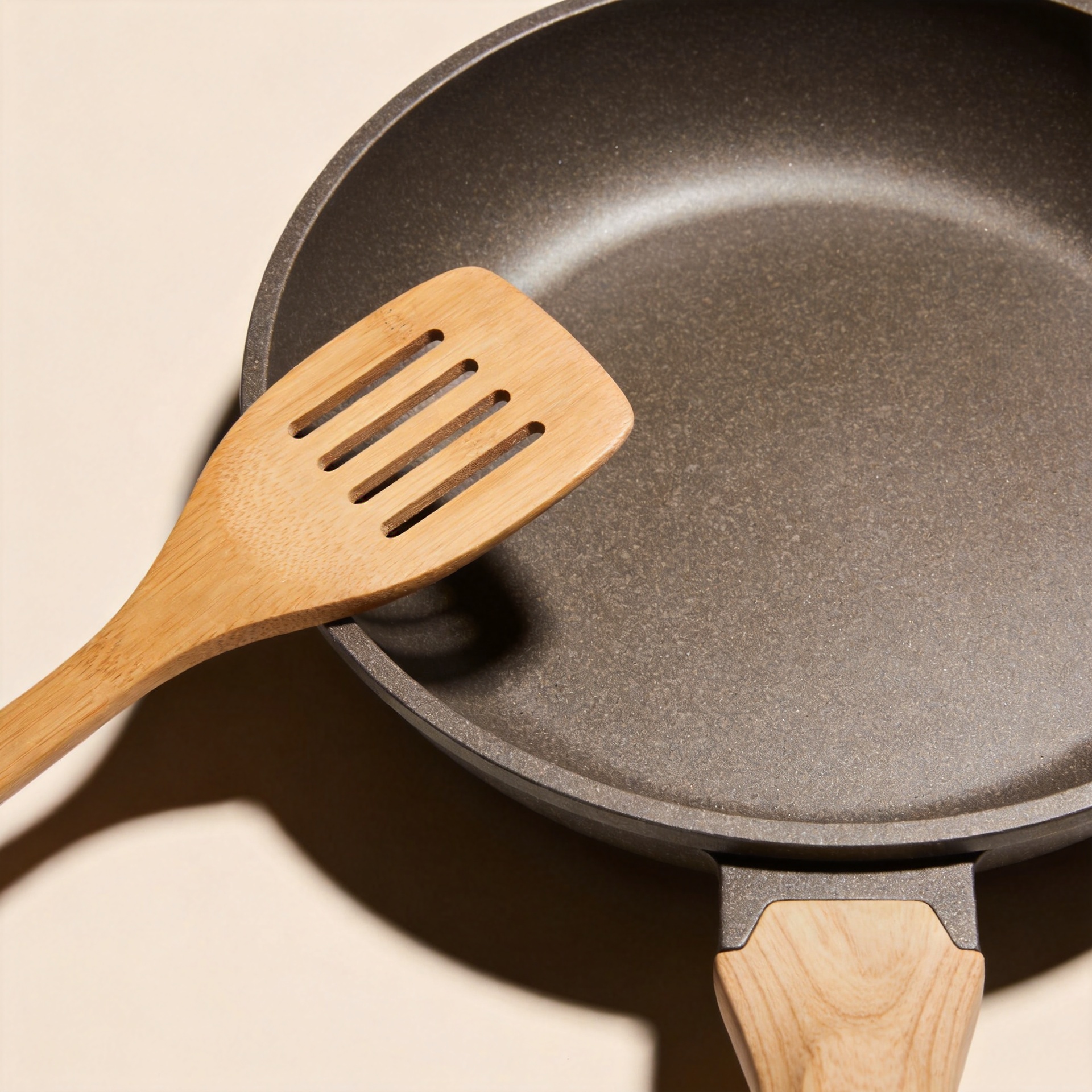
A slotted wooden spatula is a sensible option when you want excess oil or water to drain before food reaches the plate. It can be helpful for sautéed vegetables, fried items, and poached foods. The slots should be smooth and wide enough to drain liquid without catching delicate ingredients. If you rarely cook with oil or liquid, a solid head is simpler to clean and may be the more useful everyday choice.
Choose wood and finish with realistic expectations
Wood type affects weight, grain, feel, and how a utensil responds to routine kitchen use. Dense hardwoods are commonly chosen for durable cooking tools, while softer woods may show marks sooner. Still, wood species alone does not determine quality. Grain orientation, sanding, shaping, and finish all matter. A well-made beech, maple, acacia, cherry, or similar hardwood utensil can be a practical choice when the construction and finish are appropriate for its intended use.
Do not treat a natural-looking finish as proof that a utensil needs no care. An oiled finish can feel pleasant and be easy to refresh, but it may need periodic conditioning when the wood looks dry. A more sealed surface can be easier to wipe clean, yet readers should verify that any finish is suitable for the intended food-contact use rather than assuming from appearance alone.
Look for a smooth, even surface with no rough end grain, deep cracks, sticky residue, or strong chemical odor. Natural grain and color variation are normal in wood; rough finishing and splits are not. If you are sourcing several units for a retail range or a professional kitchen, request samples and compare head thickness, flatness, handle comfort, and finish consistency across pieces.
Check handle length, balance, and comfort
A wooden spatula should feel like an extension of your hand. Short handles are nimble for small pans and close work; longer handles add reach around splatter and heat. For everyday stovetop cooking, choose a length that lets your hand stay comfortably away from the pan edge without making the tool feel top-heavy.
Before you decide, ask yourself: will this be used mostly in a small frying pan, a deep pot, or a large skillet? A long, flat turner may be excellent for a griddle but awkward in a narrow saucepan. Likewise, a compact scraper may be ideal for meal prep but too short for a deep Dutch oven. Matching the handle to the vessel is often more useful than chasing a universal “premium” design.
A quick selection checklist
| Cooking task | Best head profile | What to inspect |
|---|---|---|
| Flipping eggs or pancakes | Wide, flat, thin-edged turner | Front edge, head width, smooth sanding |
| Stirring sauces or grains | Rounded or gently curved head | Comfortable grip, balanced neck, bowl contact |
| Scraping and sautéing | Straight, flat edge | Even edge, corner reach, sturdy thickness |
| Lifting fried or wet foods | Slotted head | Cleanly cut slots and easy-to-clean surfaces |
| Everyday mixed use | Medium-width, gently tapered head | Versatility without an overly thick edge |
Care for wooden cooking tools so they stay useful
Good care protects both the look and working life of a wooden spatula. Hand-wash it with mild soap, rinse promptly, and dry it thoroughly. Avoid leaving it submerged or placing it in a dishwasher, where prolonged heat and moisture can contribute to warping, raised grain, or cracking. When the surface looks dry, a food-safe wood conditioner may help restore an even feel; follow the product instructions and let the utensil dry before use.
Replace a utensil that develops deep cracks, persistent roughness, or loose fragments. A little color change and gentle smoothing from use are normal. The practical goal is not to keep wood looking factory-new forever; it is to keep the surface clean, intact, comfortable, and appropriate for the way you cook.
Final choice: build a small, task-ready set
For many kitchens, two or three well-chosen utensils beat a large collection of near-duplicates: a thin wooden turner for flipping, a rounded wooden spatula for stirring, and a straight scraper for sautéing and pan corners. Choose the head shape first, then confirm that the wood is smoothly finished, the handle feels balanced, and the care expectations suit your routine.
That approach also works for buyers evaluating food preparation utensils at scale. Focus on how each shape performs in a real cooking task, request samples when consistency matters, and avoid treating visual appeal as the only quality signal. The right wooden spatula is the one that fits your pans, your recipes, and the motions you repeat most often.